

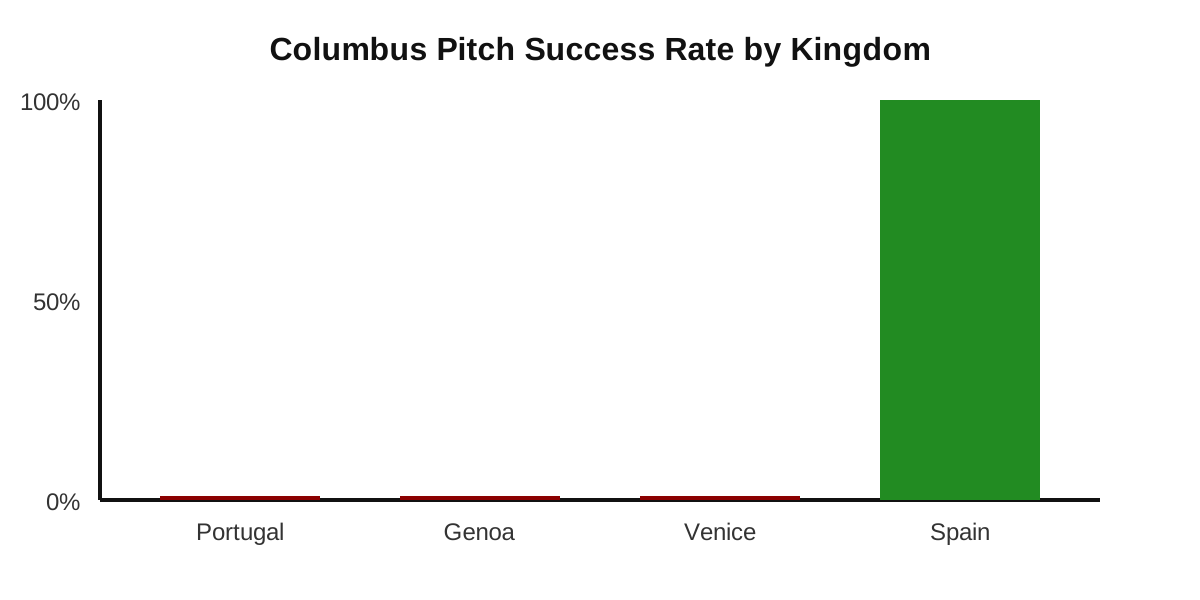
In 1492, Christopher Columbus did not just set sail into the unknown. He spent years pitching his expedition to the monarchs of Europe. He faced rejection from Portugal, Genoa, and Venice before finally convincing Ferdinand and Isabella of Spain. His pitch was a combination of geography, theology, and the promise of untold riches. Columbus understood that before he could build a fleet, he had to tell a compelling story. The dynamic of seeking capital has not changed much since then.
Fast forward to today. The royal courts have been replaced by venture capital firms on Sand Hill Road, but the frenzy remains exactly the same. Right now, the dominant obsession in the startup world is artificial intelligence. Every week, countless founders rebrand their products to include acronyms like LLM in their pitch materials. They hope that mentioning the current technological wave will automatically open checkbooks. However, slapping a popular buzzword onto a mediocre business model does not guarantee success. Investors are perceptive and quickly see through the facade.
To understand what actually works in a modern pitch, we can look at the insights shared by those who evaluate them daily. The true purpose of a pitch deck is not to close a deal on the spot. Its primary goal is simply to get you a next, more serious meeting.
Investors are incredibly busy and receive an overwhelming number of emails. Consequently, their attention span is very short. You must capture their interest in the first 200 seconds of a conversation. The most important initial step is to build credibility fast. You can accomplish this by highlighting your most impressive trait right away, whether that is revenue momentum, client logos, or your past experience as a founder.

When crafting the narrative, clarity is far more valuable than a complex story. Founders sometimes abstract their ideas so much that investors finish the presentation without understanding what the company actually does. Instead, you should dumb down the problem statement into a simple, easily understood sentence. A good business model explanation can be as basic as stating who pays you, how much they pay, and what the ultimate outcome is.
Different stages and sectors require customized approaches. In deep tech, the "why now" aspect is the most critical element because the main risk is market timing rather than the vision itself. Conversely, for patient capital investors, immediate timing might be less urgent if the long term horizon is promising.
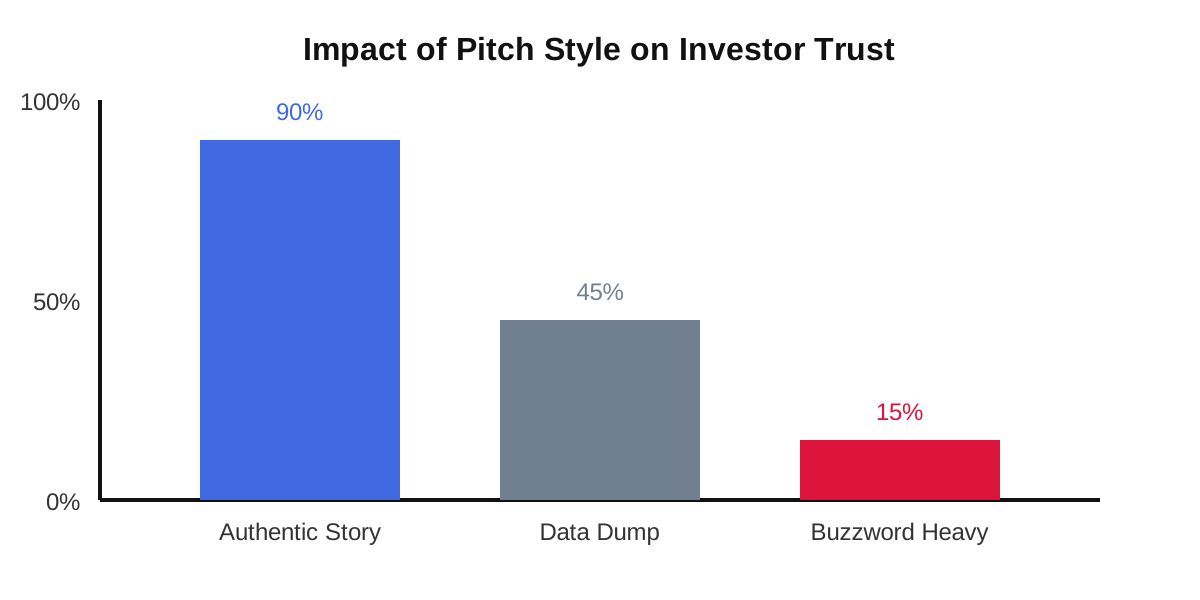
A major pitfall is relying too heavily on standard templates. Founders often copy popular pitch deck formats without thinking about whether they fit their specific business. It is better to have an authentic presentation than a rigid template. Authenticity matters immensely. If you use a buzzword like AI just because everyone else is doing it, you risk losing investor trust. One founder frankly admitted to an investor that he included AI in his deck simply because he felt he had to.
Another crucial metric for investors is the Total Addressable Market, often referred to as TAM. Investors need to know if your company's potential outcome is large enough to move the needle for their specific fund size. A common mistake founders make is copying a generic market size from a simple internet search. The best founders use a bottom up approach to calculate their market size and demonstrate how their TAM can expand over time. For instance, a food delivery startup might initially target restaurant orders but later expand its TAM by becoming a comprehensive logistics player.
Furthermore, the pitch deck should merely be an aid in the meeting room. It should not become the main character of the presentation. If an investor asks a question, you should be willing to abandon the slide order and follow their curiosity. The most successful founders can tell their entire story without a deck at all. They use the slides to guide the conversation and maintain emotional resonance, rather than simply reading text. If the investor wants to dive deep into unit economics later, you can always send a detailed follow up deck.
Ultimately, the skill of pitching lies in what you choose not to say. You might have a thousand data points to share, but you must distill them down to the most impactful facts. By keeping the narrative simple, authentic, and focused on the core problem, you significantly increase your chances of surviving the gauntlet and securing the capital you need to build the future.